
Table of contents
- Why Creative Fatigue Is Killing DTC Ad Performance in 2026
- What AI Video Ads Actually Are (and What They Are Not)
- How to Build a High-Volume AI Video Ad System: Step by Step
- Platform-by-Platform AI Video Ad Specifications for 2026
- The Cost and Speed Advantage: AI vs. Traditional Video Production
- Choosing the Right AI Video Ad Tool for Your DTC Stack
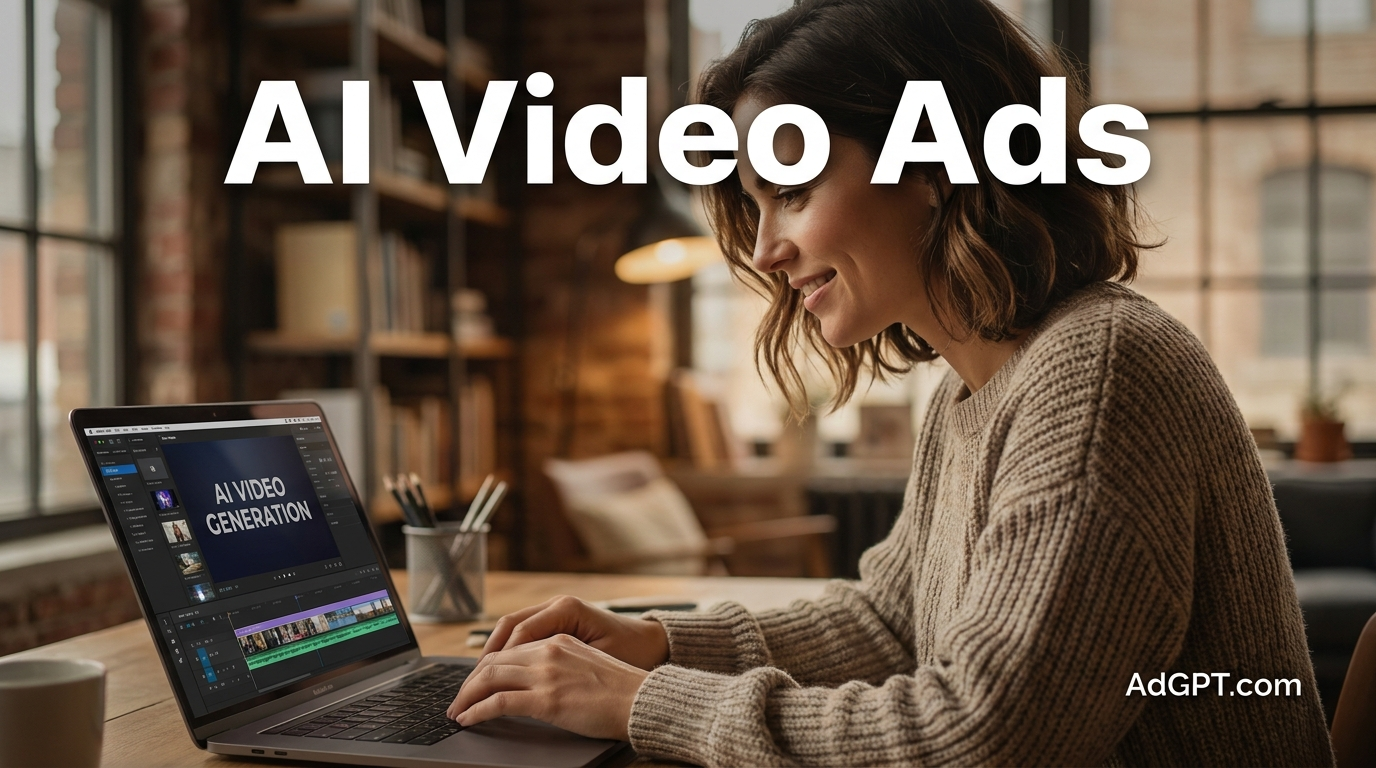
AI video ads let DTC brands produce scroll-stopping paid media in minutes — without a production crew, a freelance editor, or a six-week creative sprint. For performance marketers facing rising CPMs and creative fatigue, that speed-to-launch advantage directly translates into lower cost-per-acquisition and more winning ad sets running simultaneously.
Why Creative Fatigue Is Killing DTC Ad Performance in 2026
Creative fatigue happens when audiences see the same ad too many times and engagement drops — click-through rates fall, relevance scores sink, and Meta's algorithm punishes the ad set with higher CPMs. According to industry benchmarks, a single creative variant on Meta loses statistical effectiveness within 7 to 14 days of launch at scale. Most DTC brands need 15 to 30 fresh creative variants per month per channel just to sustain performance — a volume that traditional production pipelines cannot support without blowing the budget.
The math is brutal. A single UGC video ad can cost $300 to $1,500 to produce when you factor in talent sourcing, scripting, filming, and editing. A brand running three channels — Meta, TikTok, and YouTube — and refreshing creative every two weeks needs 18 to 36 new assets per month. At $500 average cost per asset, that is $9,000 to $18,000 in monthly production spend before a single dollar goes to media buy.
AI video ad tools collapse that cost structure. As USA Business Times has covered in its small business and startup reporting, AI-powered creative tools are reshaping how lean teams compete against enterprise ad budgets — giving founders and growth marketers the output velocity of a full creative department.
What AI Video Ads Actually Are (and What They Are Not)
AI video ads are short-form or mid-form video ad creatives generated or assembled by machine learning models. They pull from product imagery, brand copy, landing page data, and visual templates to produce platform-ready video assets. The best tools handle aspect ratio formatting, motion graphics, voiceover, music, and caption overlays automatically.
What they are not: a replacement for brand strategy. AI video ad generators execute creative production. The offer, the hook, and the audience targeting still require human judgment. The value is in removing the production bottleneck so marketers can test more hypotheses per dollar.
Key capabilities to look for in a 2026 AI video ad tool:
- URL-to-video ingestion — the tool reads your product page and auto-generates a script and visual sequence
- Multi-format export — 9:16 for TikTok and Reels, 1:1 for Meta feed, 16:9 for YouTube pre-roll
- Hook variation testing — generate 5 to 10 different opening frames for split testing
- UGC-style rendering — AI avatars or voiceovers that mimic authentic creator content
- Brand kit lock — logo, colors, and fonts stay consistent across every output
The AI Video Ad Creator from AdGPT covers all five of these capabilities and ships assets formatted for Meta, TikTok, and YouTube in a single workflow.
How to Build a High-Volume AI Video Ad System: Step by Step
The following process is designed for a DTC brand running $10,000 to $100,000 per month in paid media across Meta and TikTok. Adapt the volume targets to your budget and channel mix.
- Audit your current creative library. Identify which ad formats — static, video, UGC — are generating the lowest CPA and highest return on ad spend. These are your creative benchmarks. Feed their hooks, CTAs, and visual structures into your AI tool as reference inputs.
- Map your creative calendar. Decide how many new variants you need per week per channel. A $30,000/month Meta account typically needs 8 to 12 new video creatives per week to prevent fatigue-driven CPM increases.
- Generate a batch of 10 to 20 video ads from your product URL. Use an AI Ads Generator to ingest your product page and generate multiple script and visual combinations. Focus on hook variation in the first 3 seconds — that is the highest-leverage variable in TikTok and Reels performance.
- Segment by funnel stage. Top-of-funnel video ads should lead with problem-awareness hooks. Bottom-of-funnel retargeting ads should lead with social proof, urgency, or offer specificity. Generate separate batches for each stage.
- Export in all required formats. A single video concept should ship as 9:16, 1:1, and 16:9. Do not manually resize — use an AI resizer or a tool that auto-exports all formats simultaneously.
- Launch in a dedicated testing campaign. Run a Creative Testing campaign with a $50 to $100/day budget per ad set. Let each video run for 3 to 5 days before comparing thumb-stop rate, hook rate (3-second video views / impressions), and CPA.
- Promote winners to your main campaign and retire losers. Replace fatigued creatives weekly. Feed winning creative elements back into the AI tool as new reference points for the next batch.
Platform-by-Platform AI Video Ad Specifications for 2026
Each platform has distinct technical requirements and audience behavior patterns. Mismatched specs waste production time and hurt quality scores. Use this table as a reference when configuring your AI video ad exports.
| Platform | Primary Format | Aspect Ratio | Max Length (Paid) | Critical Hook Window | Key Performance Metric |
|---|---|---|---|---|---|
| Meta (Facebook Feed) | In-Feed Video | 1:1 or 4:5 | 240 min (recommend 15–30 sec) | First 3 seconds | 3-second video views, CPA |
| Meta (Instagram Reels) | Reels Ad | 9:16 | 60 seconds | First 2 seconds | Thumb-stop rate, CTR |
| TikTok | In-Feed TopView | 9:16 | 60 seconds (optimal: 15–30 sec) | First 2 seconds | 6-second view rate, CVR |
| YouTube | Skippable In-Stream | 16:9 | No limit (recommend 15–60 sec) | First 5 seconds (pre-skip) | View-through rate, CPA |
| Sponsored Video | 16:9 or 1:1 | 30 minutes (recommend 15–30 sec) | First 3 seconds | View rate, lead form CVR |
For ecommerce brands, Meta and TikTok deliver the highest purchase conversion volume at this stage of the market. The Ecommerce Ad Creator and the Facebook Ads Generator are both configured to output assets optimized for these platforms by default.
The Cost and Speed Advantage: AI vs. Traditional Video Production
The business case for AI video ads is straightforward when you model the numbers. Traditional production — even scrappy UGC-style content — carries hard costs in talent, coordination, revisions, and turnaround time. AI production compresses the timeline from weeks to minutes and the cost from hundreds of dollars to cents per asset.
For a DTC brand generating $50,000 per month in ad spend, the creative production budget typically represents 10 to 20 percent of total media investment. Cutting that from $8,000 to $1,200 per month — a realistic outcome when shifting to an AI-first workflow — frees capital that can be redirected to media budget, increasing reach and accelerating revenue growth without changing the overall marketing budget.
The related post on AI Ad Creative: Scale DTC Paid Media Without Creative Fatigue covers the full financial model in detail, including breakeven analysis at different ad spend tiers. And if video is only part of your creative mix, the guide on the UGC Ad Generator: Scale DTC Creative Without the Bottleneck addresses how to integrate AI-generated UGC-style content alongside video for maximum channel coverage.
Choosing the Right AI Video Ad Tool for Your DTC Stack
Not all AI video ad platforms are built for performance marketers. Some are designed for social media managers who want polished branded content; others are built for growth teams who need test volume, data integration, and fast iteration. The criteria that matter most for DTC paid media teams are:
- Speed of output: Can you generate 20 video variants in under 30 minutes?
- Hook customization: Can you manually edit the first 3-second frame and test multiple openings?
- Platform-native formatting: Does it auto-export in all required aspect ratios without manual resizing?
- Brand consistency: Does it lock your brand kit across all outputs?
- Integration with your ad accounts: Can it push directly to Meta Ads Manager or TikTok Ads Manager?
AdGPT's AI Ads Generator is built specifically for DTC performance teams. It ingests product URLs, generates multi-format video and static creatives, maintains brand kit consistency, and supports the testing velocity required to stay ahead of creative fatigue at scale. For brands comparing options, AdGPT benchmarks favorably against alternatives on output speed, format flexibility, and ecommerce-specific creative intelligence.
Frequently asked questions
What are AI video ads and how do they differ from traditional video ads?
How many AI video ad variants does a DTC brand need per month?
Which platforms perform best for AI-generated video ads in 2026?
What is the ideal length for an AI video ad on TikTok or Meta?
Can AI video ads replace human creative directors for DTC brands?
How much does it cost to produce AI video ads compared to traditional production?
🤖 Explore this article with AI



Daniel Rozin
Get featured in this article
Place your brand in front of thousands of marketers and decision-makers. Pick the articles, add your links and anchor text, and our editors handle the integration — with an answer within 24 hours.
- $200Editorial Mention
- $500Expanded Editorial
- $1,250Featured Placement
We don't do link exchanges or free swaps — placements are paid and subject to editorial review. If a placement isn't approved, it's fully refunded.


