Table of contents
- Why Creative Fatigue Is the Real Enemy of Paid Media Scale
- What Ad Clone Actually Means in a Performance Marketing Context
- How to Use Ad Clone to Build a Scalable Creative Pipeline
- Ad Clone vs. Manual Creative Iteration: A Performance Comparison
- Platform-Specific Ad Cloning Strategies for Meta, TikTok, and YouTube
- Ad Cloning for Ecommerce: Specific Tactics That Move CAC
- Measuring the ROI of an Ad Clone Strategy
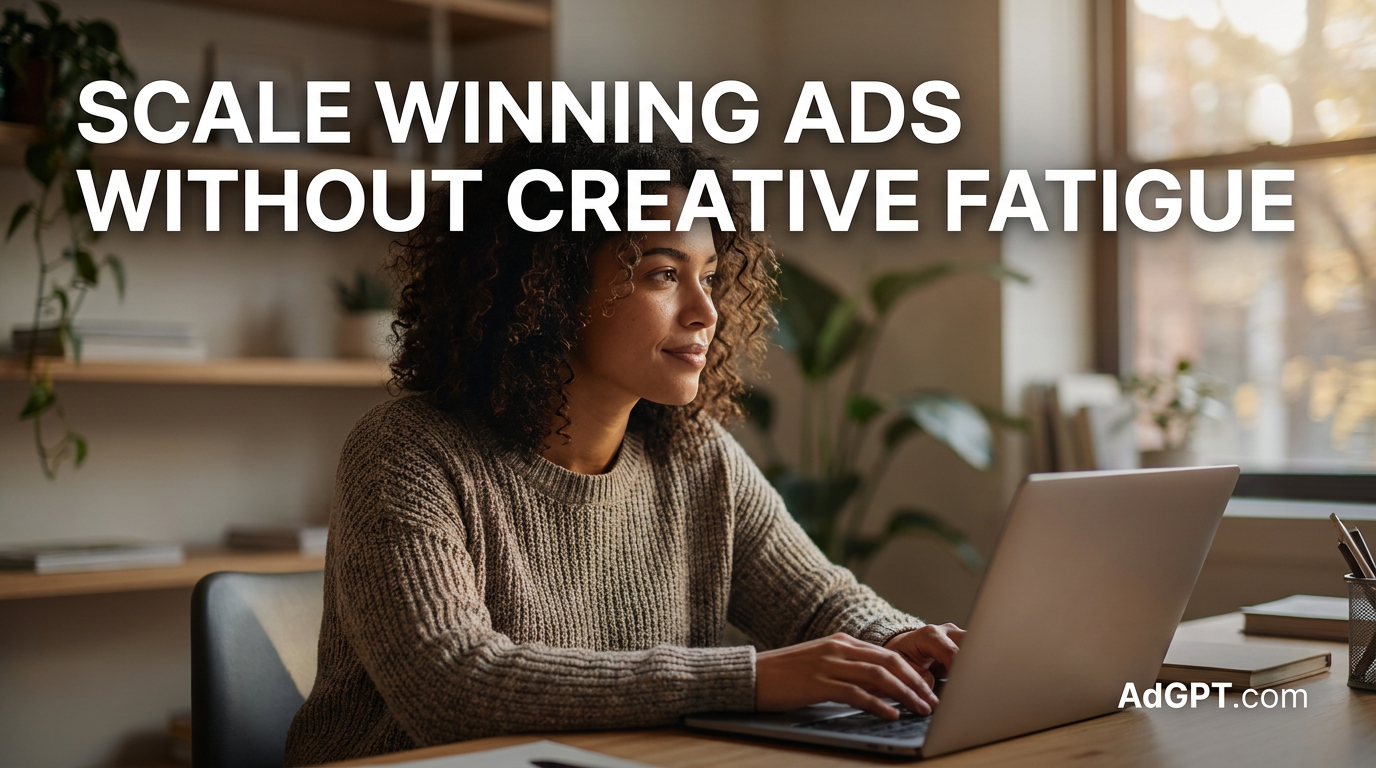
An ad clone is a technique where a proven, high-performing ad is systematically replicated with controlled variations — new hooks, formats, or copy angles — so media buyers can scale spend without starting from scratch. For DTC brands battling rising CPMs and creative bottlenecks, ad cloning is one of the highest-leverage moves available in 2026.
Why Creative Fatigue Is the Real Enemy of Paid Media Scale
Meta's own data shows that creative fatigue can reduce ad relevance scores by up to 40% within two to four weeks of a campaign launch. When CPMs on Meta were averaging $11.50 in Q1 2025 — up from $9.80 in Q1 2023 — the cost of letting a winning ad die without a replacement became brutally clear. Every day a fatigued creative runs without a fresh variant, click-through rates drop and cost-per-acquisition climbs.
The traditional solution — briefing a designer, waiting a week, reviewing revisions — simply cannot keep pace with algorithm-driven ad delivery. A single winning creative on a $500/day budget has a shelf life of roughly 7–14 days before frequency erodes performance. To maintain a healthy creative rotation, most DTC brands need 8–12 new ad variants per month per campaign. For teams without a large in-house creative department, that number is impossible to hit manually.
Ad cloning solves this by treating a winning ad as a template rather than a one-time asset. Instead of rebuilding from zero, marketers take what already works — the proven format, the validated audience signal, the converting offer structure — and generate systematic variations at speed.
What Ad Clone Actually Means in a Performance Marketing Context
Ad cloning is not simply copying an ad. It is a structured process of preserving the structural DNA of a high-performing creative while introducing controlled variation across specific dimensions: the opening hook, the headline, the CTA text, the background, the voiceover tone, or the product angle.
The goal is to answer one question: which element of this ad is doing the heavy lifting? By cloning with one variable changed at a time, media buyers run a continuous creative test without burning a new audience or wasting budget on an untested concept. This approach is sometimes called structured creative iteration and is the foundation of how top-tier DTC performance teams manage their Meta and TikTok creative pipelines.
AdGPT's Ad Clone feature automates this entire workflow. A marketer inputs a URL or uploads an existing ad, and the tool generates production-ready variants that preserve the converting structure while refreshing the surface-level elements that cause fatigue. The output is immediately usable — no designer handoff, no revision loop.
How to Use Ad Clone to Build a Scalable Creative Pipeline
- Identify your control ad. Pull your last 30 days of campaign data and surface the creative with the lowest CPA and the highest thumb-stop rate. This is your clone source. Do not clone mediocre ads — you will only multiply mediocrity.
- Audit which element is driving performance. Is it the hook? The social proof copy? The product shot? Tag the element before you clone so you know what to preserve and what to vary.
- Input the ad into AdGPT's Ad Clone tool. Paste the landing page URL or upload the existing creative. The AI analyzes the structure and generates variant briefs automatically.
- Select variation dimensions. Choose whether to rotate hooks, headlines, CTAs, or visual formats. For Meta, prioritize hook variation. For TikTok, prioritize opening visual and audio variation.
- Export and tag variants systematically. Name each variant with a clear convention (e.g., CTRL-HOOK-V2, CTRL-CTA-V3) so your media buyer can read performance data cleanly in Ads Manager.
- Launch in a fresh ad set. Never drop cloned variants into the original campaign's ad set. A new ad set gives the algorithm a clean signal and prevents cannibalization of the original ad's delivery data.
- Set a review cadence. Check performance at the 72-hour mark and again at day seven. Pause variants with a CTR below your account average. Promote winners to the main campaign budget.
Ad Clone vs. Manual Creative Iteration: A Performance Comparison
| Dimension | Manual Creative Iteration | Ad Clone (AdGPT) |
|---|---|---|
| Time to first variant | 3–7 business days | Under 5 minutes |
| Cost per variant | $150–$500 (designer + revisions) | Included in subscription |
| Variants per month (typical team) | 4–8 | 50+ |
| Structural fidelity to control | Varies by designer interpretation | Preserved algorithmically |
| Platform format coverage | One format per brief | Meta, TikTok, YouTube, LinkedIn simultaneously |
| Creative testing velocity | Low | High |
| Dependency on creative team bandwidth | High | None |
Platform-Specific Ad Cloning Strategies for Meta, TikTok, and YouTube
Meta (Facebook and Instagram)
Meta's Advantage+ campaigns reward creative diversity. Running 6–10 active variants per ad set gives the algorithm more signal to optimize delivery toward the highest-converting segment. When cloning for Meta, prioritize the first three seconds of video or the first line of static ad copy — these are the primary fatigue drivers. AdGPT's Facebook Ads Generator integrates directly with this cloning workflow, producing variants in the exact aspect ratios Meta recommends: 1:1 for feed, 9:16 for Reels and Stories.
As Online Store News notes in its coverage of Shopify merchant advertising trends, brands that rotate creative at least every 10 days consistently outperform those running static campaigns, particularly in competitive product categories like apparel, beauty, and home goods — categories where CPMs spike hardest during Q4.
TikTok
TikTok's algorithm has a shorter creative lifespan than Meta — in some categories, fatigue sets in as early as day five. The platform's Creative Center data from 2024 shows that top-performing TikTok ads average a 3.4-second hook before delivering the core message. When cloning for TikTok, the first three seconds must change with every variant while the offer and proof structure stay constant. AdGPT's TikTok Ads Generator produces hook-first variants built to this specification.
YouTube
YouTube skippable in-stream ads require a hold-the-viewer approach in the first five seconds. Clone variants should test different opening statements — a question, a bold claim, a price anchor — while preserving the product demonstration that drives view-through conversions. YouTube's CPM for DTC brands averaged $9.20 in 2024, making it a cost-efficient complement to Meta for brands hitting frequency walls.
Ad Cloning for Ecommerce: Specific Tactics That Move CAC
For ecommerce brands specifically, ad cloning pairs naturally with a structured testing calendar. The most effective approach is to clone the top ad from each product collection every four weeks, introducing seasonal or promotional angles as the variation layer. A summer skincare brand, for example, clones its best SPF ad into a back-to-school variant and a fall transition variant — same structure, new contextual hook.
AdGPT's Ecommerce Ad Creator is built for this workflow, pulling product metadata, imagery, and pricing directly from a store URL to populate clone variants without manual data entry. Brands running Shopify or WooCommerce can connect their product catalog and generate a full month of cloned variants in a single session.
For teams managing multiple SKUs, the AI Ads Generator extends ad cloning across the entire product line — a single winning ad structure can be adapted to 20 different products in the time it previously took to produce one.
If you work in affiliate marketing and need compliant creative at scale, the approach is similar but with compliance constraints layered in — see the detailed breakdown in Ad Clone for Affiliate Marketers: Scale Compliant Creative Fast. And for technical questions around format dimensions when repurposing cloned video variants across platforms, the Best Video Size for Instagram: Complete 2026 Guide covers every current specification.
Measuring the ROI of an Ad Clone Strategy
The clearest signal that an ad clone strategy is working is a declining blended CAC alongside a stable or improving ROAS — not because the offer changed, but because fresh creative is maintaining relevance scores and suppressing CPM inflation. Brands that implement a structured clone-and-rotate process typically report a 20–35% reduction in average CPM within 60 days, according to aggregated data from Meta's creative benchmarking tools.
Track three metrics specifically: frequency (clone when it exceeds 2.5 on a 7-day basis), CTR trend (clone when week-over-week CTR drops more than 15%), and cost-per-click (clone when CPC rises more than 20% above your trailing 30-day average). These three triggers, automated as alerts in your ad account, remove the guesswork from the creative refresh decision.
Frequently asked questions
What is ad cloning in digital advertising?
How often should DTC brands clone their ads?
Does ad cloning violate Meta or TikTok platform policies?
What elements should stay the same when cloning a winning ad?
Can I clone competitor ads legally?
How does AdGPT's Ad Clone differ from just duplicating an ad in Ads Manager?
🤖 Explore this article with AI


Tal Yeger
Get featured in this article
Place your brand in front of thousands of marketers and decision-makers. Pick the articles, add your links and anchor text, and our editors handle the integration — with an answer within 24 hours.
- $200Editorial Mention
- $500Expanded Editorial
- $1,250Featured Placement
We don't do link exchanges or free swaps — placements are paid and subject to editorial review. If a placement isn't approved, it's fully refunded.